
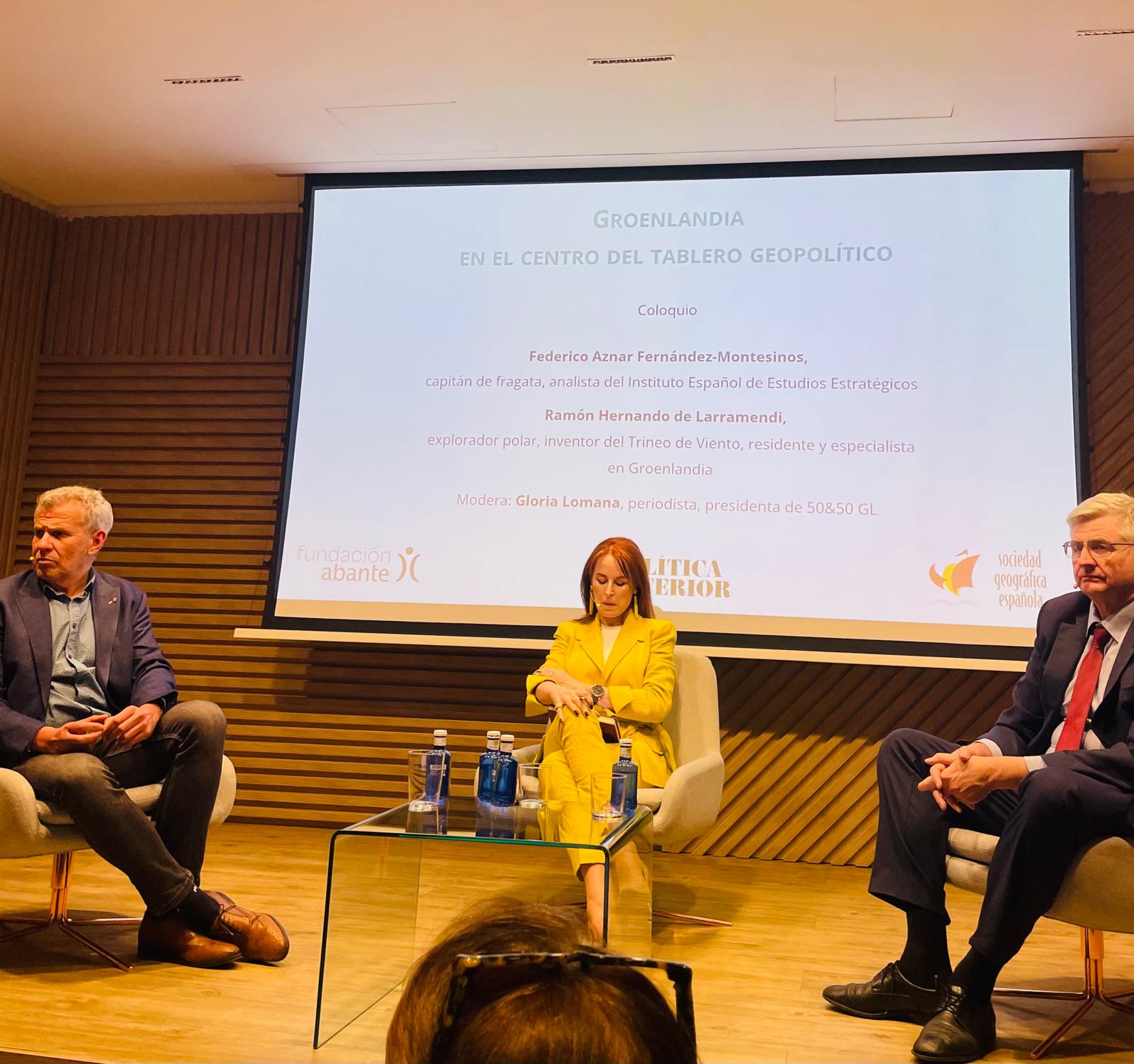
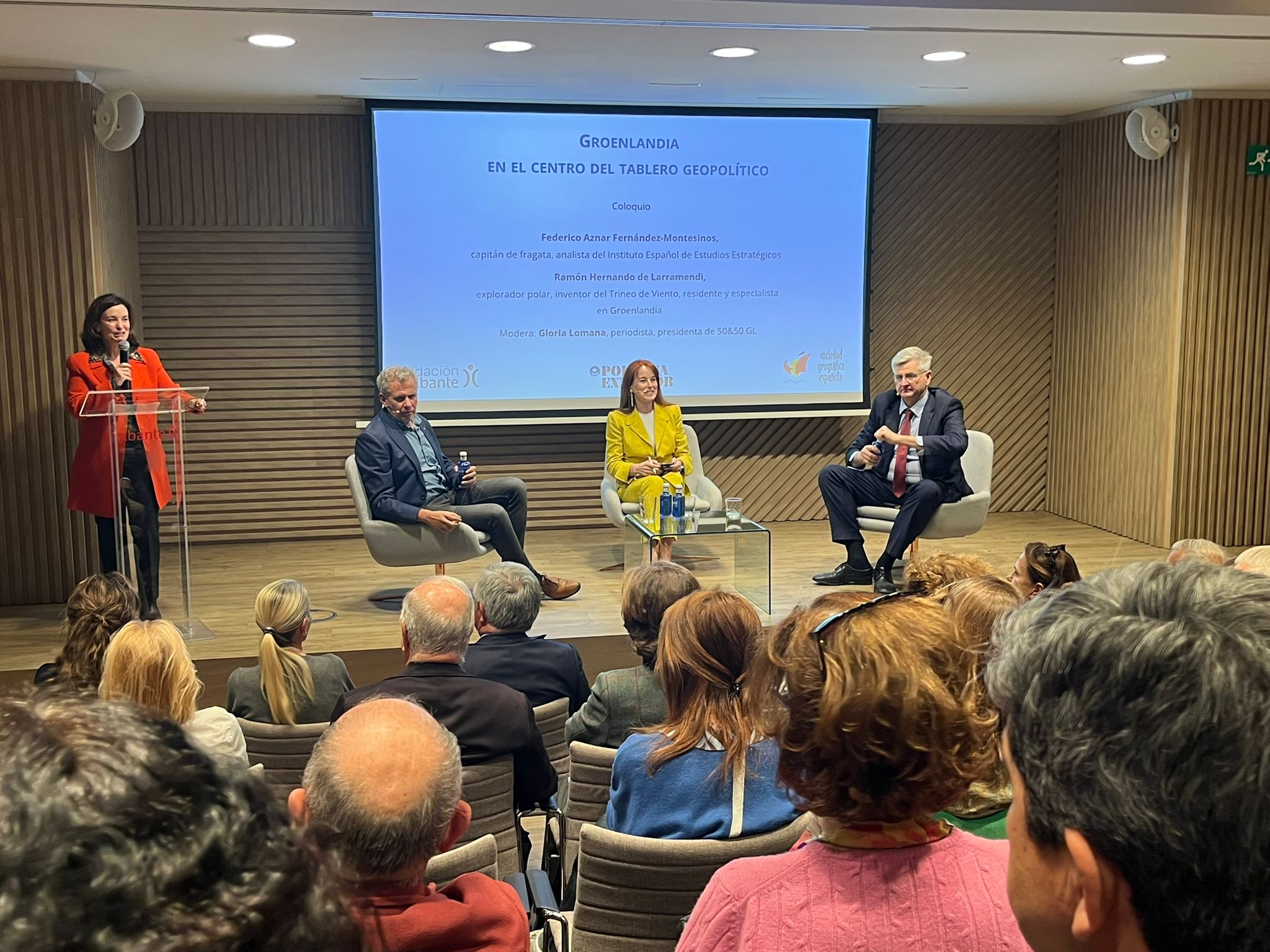
On February 24th, the auditorium of Fundación Abante hosted a high-level discussion titled “Greenland at the Center of the Geopolitical Chessboard.” The roundtable brought together security expert Federico Aznar Fernández-Montesinos, polar explorer Ramón Larramendi, and was moderated by journalist Gloria Lomana. The debate took place on a significant date, marking four years since the outbreak of the war between Ukraine and Russia.
Speakers highlighted Greenland’s unique geostrategic position, shaped by decades of international interest. Historically, the island’s location was critical during the Cold War, with the Thule Air Base serving as a key defense outpost. Its security remains closely tied to the United States, and the population has traditionally maintained a pro-American stance.
The discussion revisited notable moments, including former U.S. President Donald Trump’s 2019 proposal to purchase Greenland, as well as concerns over Russia’s growing ambitions in the Arctic. Despite Greenland’s reserves of rare earth elements, mining projects have largely failed to prove economically viable, while environmental regulations further complicate large-scale resource exploitation.
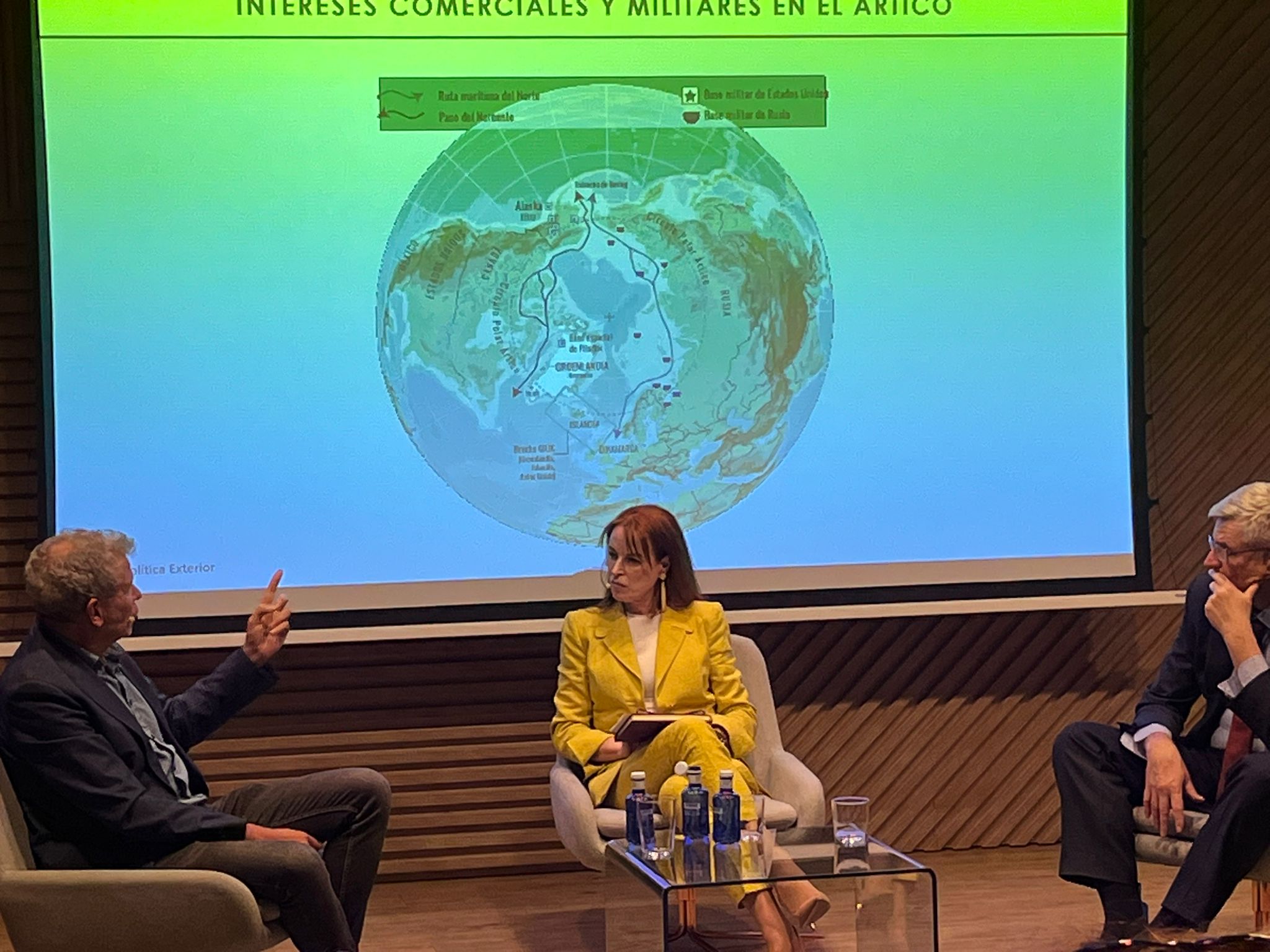
Looking ahead, experts examined the strategic implications of a potentially navigable Arctic Ocean by 2035. New maritime routes could significantly shorten transit times between Asia and Europe, with container vessels already testing these emerging corridors. At the same time, the region’s energy potential — particularly hydroelectric power — could support future industrial development and artificial intelligence infrastructure, reinforcing Greenland’s dual role as both a strategic and technological asset.
The roundtable concluded with a clear message: Greenland is currently under intense international scrutiny. Its geostrategic position, mineral resources, and Arctic projection firmly place it at the center of global strategic calculations.